Aspirus Health Uses AI Technology to Accelerate Stroke Detection and Improve Patient Outcomes
New Viz.ai platform helps clinicians identify life-threatening strokes faster across Central Wisconsin, Michigan, and Minnesota.
5/27/2026
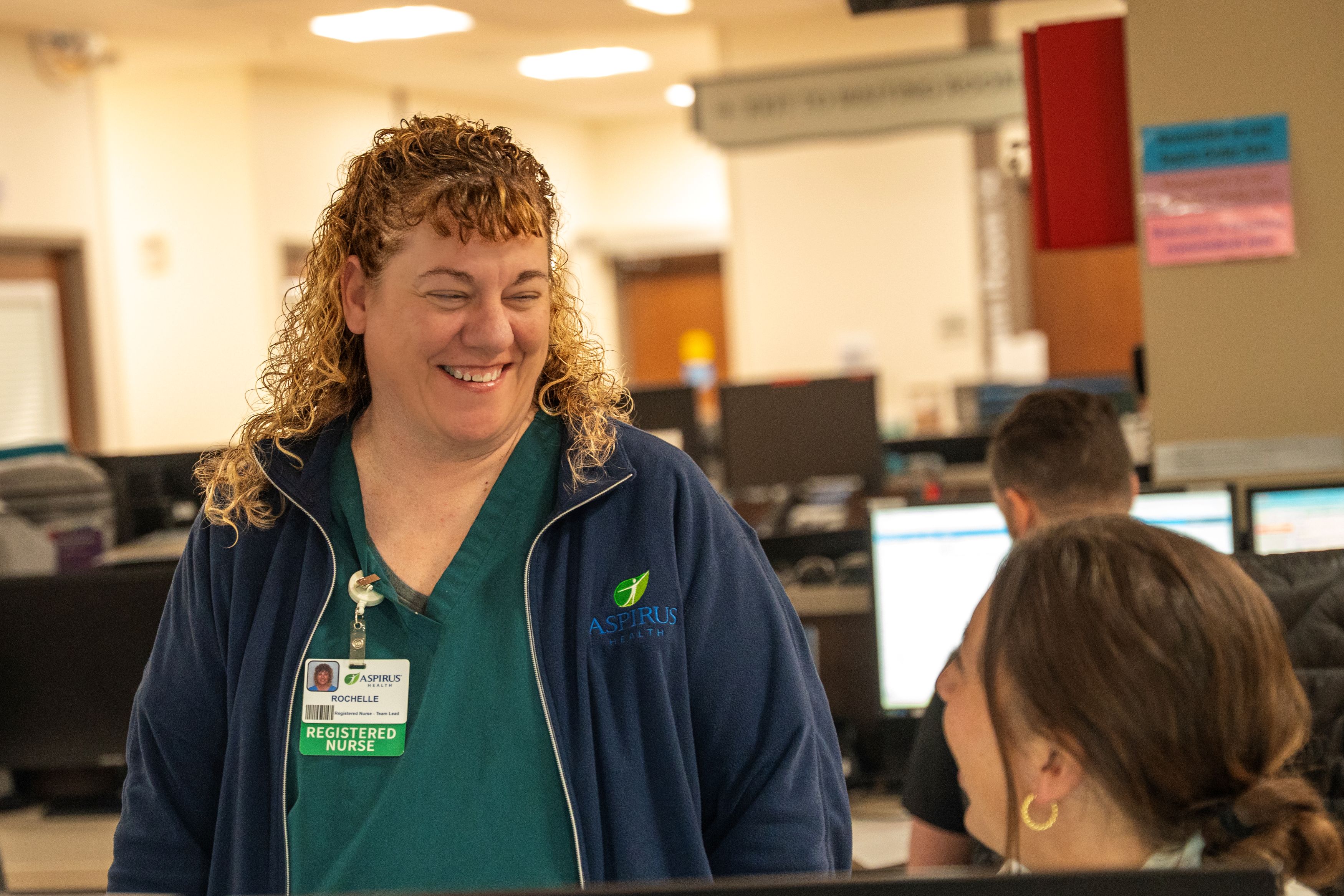
Rochelle Anderson-Tesch, Aspirus Stroke Coordinator
Aspirus Health is expanding its stroke response capabilities with new artificial intelligence (AI) technology designed to detect life-threatening strokes faster and support rapid clinical decision‑making.
The Viz.ai platform, implemented across the system earlier this year, automatically analyzes CT scans to identify potential hemorrhagic strokes or large vessel occlusions, conditions that require immediate intervention. Stroke is a leading cause of serious long-term disability in the United States, and timely treatment is critical to preserving brain function.
Recent data from the National Institute of Neurological Disorders and Stroke shows that the brain loses an estimated 1.9 million neurons every minute during an untreated stroke, underscoring the importance of rapid diagnosis and care. Aspirus Health’s new technology alerts radiologists and emergency physicians within seconds when a scan suggests a severe stroke, helping teams mobilize quickly.
“This technology allows us to identify life-threatening strokes faster and get patients the care they need within critical treatment windows,” said Rochelle Anderson-Tesch, Aspirus Stroke Coordinator. “Combining medicine with advanced computer analysis helps reduce long‑term disability and improves outcomes for our patients.”
Aspirus clinicians use the Viz.ai platform to support the evaluation of both ischemic strokes, caused by a blood clot blocking blood flow to the brain, and hemorrhagic strokes, which occur when a blood vessel ruptures. For ischemic strokes, patients may be eligible for a clot busting medication called Tenecteplase, but only within 4.5 hours of their last known well time. After that window, the medication is no longer effective.
Smoking cessation and blood pressure control remain two of the most important ways to reduce stroke risk. According to the Centers for Disease Control and Prevention, high blood pressure is responsible for about 50 percent of all strokes in the U.S. Anderson-Tesch encourages community members to monitor their blood pressure regularly and seek medical guidance if readings are consistently high.
“Recognizing the signs of stroke early, and acting immediately, is the most important thing people can do,” Anderson-Tesch said. “If you or a loved one shows any symptoms, call 911 right away.”
Aspirus Health continues to invest in tools, training, and community education to strengthen stroke care across the region. The system encourages families, schools, and community groups to learn the signs of stroke and understand the importance of seeking emergency care without delay.
For more information about stroke care at Aspirus, please visit aspirus.org/stroke-care.

Back to all Posts