Aspirus Sustainability Program
|

|
Overview
|
|
As a leader in the communities we serve, Aspirus is committed to being economically, socially and environmentally responsible. The Aspirus Sustainability Program was established in 2018 as a coordinated, strategic effort to identify and implement sustainability initiatives intended to improve the lives of our patients and the health of our communities. This program is in direct alignment with our mission: We heal people, promote health and strengthen communities.
Program Long-Term Goals
|
|
2030
|
Reduce organizational emissions by 50%
|
|
2050
|
Achieve net-zero emissions
|
* Goals are based on the White House / U.S. Department of Health and Human Services (HHS) Health Care Sector Pledge. Aspirus Health joined the pledge at its outset in 2022.
About Sustainability
What is Sustainability?
Sustainability is not just about protecting trees or nature; it is about making responsible choices with the resources we use every day. The goal is to meet the needs of people today without making it harder for future generations to meet their needs. This means using our natural resources such as water, energy, and land in a way that does not damage or waste them over time. Sustainability encourages people to think beyond the present and consider how their actions may affect the future.
Sustainability also involves keeping a balance between the environment, society, and the economy. Taking care of the planet, supporting healthy communities, and maintaining financial stability all play a role in sustainability. Simple actions like reducing waste, reusing items, conserving energy, and just being mindful of how we use our resources can make a big difference. When people work together to make these choices, it helps us to create a stronger and more resilient community for everyone.
Why is Sustainability Important for Patient Health and Community Well-Being?
Sustainability plays an important role in supporting healthy people and thriving communities. Clean air, safe water, and a well-cared-for environment help create the conditions people need to live, grow, and feel their best. By caring for the world around us, we help build healthier, safer places for everyone. Focusing on sustainable practices reflects our mission to heal people, promote health, and strengthen communities.
In health care, sustainability means considering how our operations impact both the environment and the well-being of patients, staff, visitors, and the communities we serve. Hospitals and health systems that reduce waste, prevent pollution, and use resources responsibly help create healthier spaces for care and healing. Looking ahead, sustainability also helps communities remain resilient and prepared for future challenges, including environmental changes and natural disasters. Ultimately, sustainability supports healthier lives, stronger communities, and a brighter future for generations to come.
|

|
Our Contributions
|
|
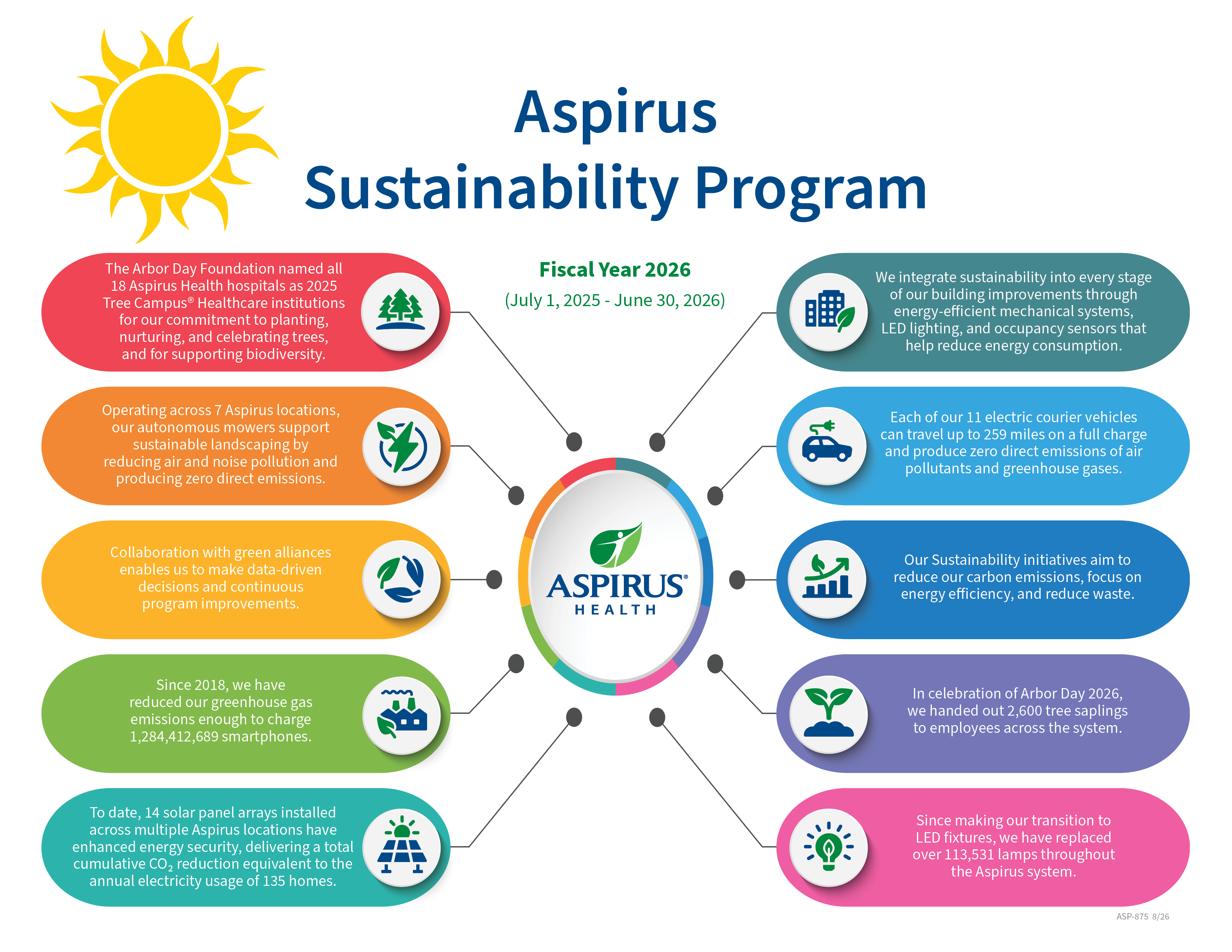
Click the infographic below to view larger.
|

|
What Can I Do?
|
|
Sustainability can be integrated into many aspects of your daily life. It’s all about making intentional, everyday choices that reduce waste, conserve resources, and protect ecosystems. Below, you can find some ways you can make a difference at work and home.
How to Support Sustainability
At Work
- Hibernate computers at night instead of leaving them running.
- Turn off conference room lights, TVs and computers.
- Recycle cans, copy paper and plastic bottles.
- Choose non-plastic food utensils and containers.
- Use reusable cups instead of Styrofoam.
- Print documents double sided and in black & white.
- Swap out paper Post-it notes for digital desktop notes to reduce daily office paper waste.
- Use electronic media, when possible, rather than printing.
- Walk, don't drive from one building to another.
- Carpool to work or offsite meetings.
- Bike or walk to work if possible.
- Take the stairs rather than elevators to save building energy.
At Home
- Minimize food waste by meal planning and using leftovers creatively.
- Shop at local farmers markets for fresh, seasonal produce.
- Compost fruit peels, vegetable scraps, and yard clippings at home.
- Donate and purchase gently used clothing.
- Plant native species in your home garden to support local wildlife.
- Switch to reusable cotton pads, coffee filters, paper towels, straws, grocery bags, etc.
- Unplug electronics when not in use to save energy.
- Replace old incandescent light bulbs with high-efficiency LED alternatives.
- Support local businesses versus online shopping.
- Air dry clothes instead of using a dryer.
- Switch from dryer sheets to dryer balls to save money and reduce waste.
- Repair torn clothes or broken furniture instead of throwing them away.
Click the arrows to move forward and back within the above slideshow.