Why Patients Are Choosing the WATCHMAN™ Device Over Blood Thinners
2/25/2026
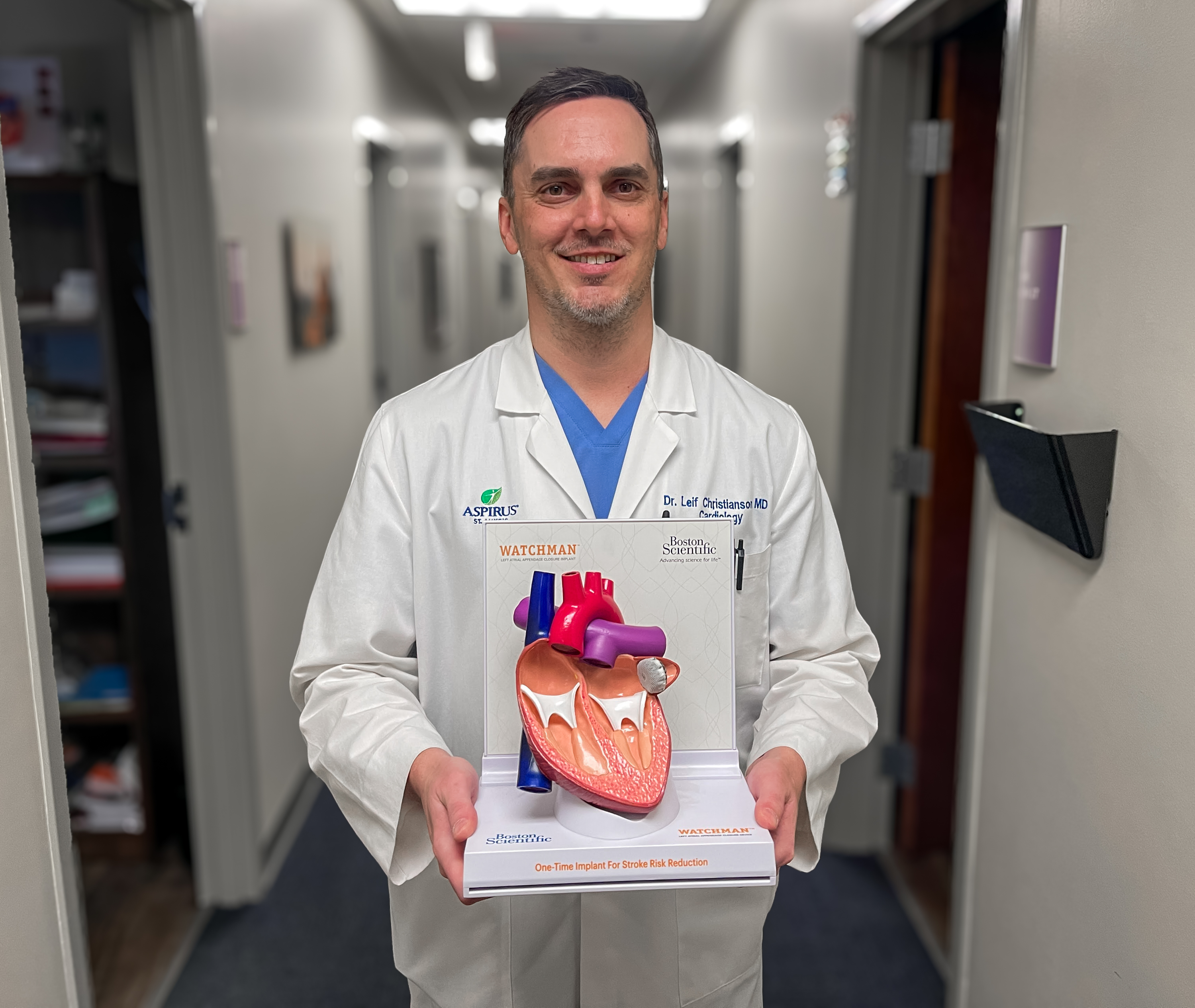
Dr. Leif Christianson, Aspirus Cardiologist
In your heart, there’s a small pouch that most people have never heard of. It’s called the left atrial appendage. For those with atrial fibrillation, or AFib, this is where more than 90 percent of stroke-causing clots form.
“AFib is an abnormal heart rhythm,” explained Aspirus Cardiologist Dr. Leif Christianson. “With AFib comes an increased risk of stroke.” According to the CDC, people with AFib have roughly fivefold, or 400 percent, higher risk of ischemic stroke.
That’s why stroke prevention is the most important conversation doctors have with AFib patients.
For years, blood thinners have been the go-to treatment. These medications work well. However, they also require patients to live with an ongoing risk of bleeding. For some, that tradeoff feels manageable. For others, especially those who are active or live in rural areas, it can feel like a risk they never quite forget about.
That is where the WATCHMAN device comes in. “It looks like a circular metal parachute with a skirt over it,” Dr. Christianson said. “We introduce it through a vein in the leg, advance it to the heart, and then it springs into shape, sealing off the left atrial appendage.”
Once in place, heart tissue grows over the device. The appendage becomes sealed, and the area where most clots form is no longer part of the equation. This means the patient can stop taking blood thinners entirely.
The procedure is performed on an outpatient basis, and recovery is quick and simple. Most patients only need to avoid heavy lifting for about two weeks while the access site in the leg heals.
Growing numbers of success stories have steadily sparked interest in the WATCHMAN device. According to Dr. Christianson, patients are drawn to it for several key reasons:
- It reduces stroke risk without having to take blood thinners.
- A hospital stay is not required.
- Recovery is quick with minimal restrictions.
- More than 99 percent of patients have anatomy that fits the device.
- It offers peace of mind for those who live remotely or lead active lifestyles.
While the WATCHMAN device helps lower stroke risk, it is not a treatment for AFib itself. “It’s all about protecting against stroke without being on a blood thinner long-term,” Dr. Christianson explained.
For a long time, blood thinners were the only way for patients with AFib to manage their stroke risk. Today, the WATCHMAN device provides a safe and effective alternative, offering patients the freedom to choose whichever options suites them best.
To learn more about heart and vascular services available through Aspirus, including care for heart rhythm conditions like AFib, visit aspirus.org/heart-vascular-services.

Back to all Posts